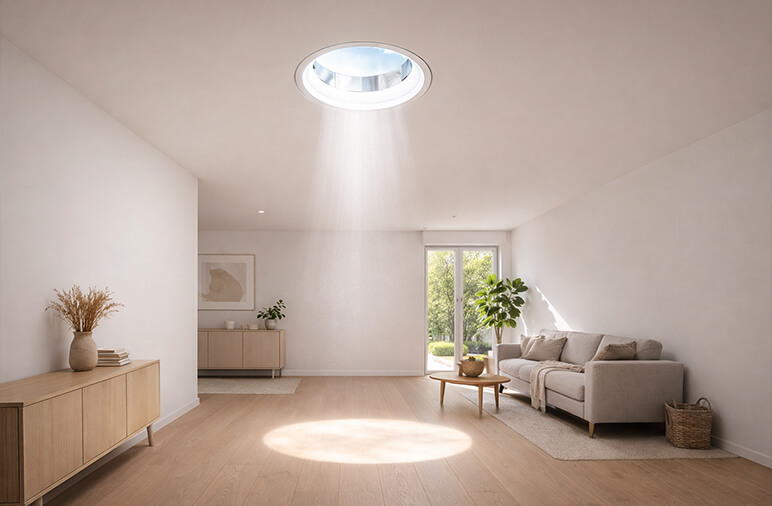
Sun tunnel skylights are a smart, energy-efficient way to brighten interior spaces that don’t have access to windows.
From hallways and bathrooms to closets and kitchens, they channel natural daylight from your roof into darker areas
of your home or office.
While sun tunnels are designed to be low-maintenance and durable, they are not completely resistant to wear and
tear especially in areas with unpredictable weather conditions.
Understanding common sun tunnel skylight issues and knowing when to call a professional can help you protect your
roof, your ceiling, and your investment.
Common Sun Tunnel Skylight Problems
1. Leaks & Water Damage
Nothing spikes your heart rate like a mysterious water stain spreading across your ceiling. You first notice a faint yellow ring on the ceiling. Then another appears. During a heavy rainstorm, water begins to leak from above a clear indication that moisture has penetrated the structure. Leaks are the number one issue people panic about with sun tunnels. And honestly? They should, because water does not play fair! Here’s what usually causes it:- Flashing that wasn’t installed properly
- Seals that have aged and cracked
- A roof dome that took one too many hits from debris
- Integration with the roof that wasn’t done right from day one
When should you call a professional
If you see any signs of moisture around your sun tunnel, don’t ignore it. Water intrusion can spread quickly, affecting insulation, framing, and even electrical components. Professional skylight repair contractors ensures the flashing is corrected, the dome is inspected, and the system is sealed properly to prevent future leaks.2. Cracked, Cloudy, or Faded Dome
Ever walk into a room and think, “Didn’t this used to be brighter?” That subtle dimming isn’t your imagination. The dome on your roof is basically the light catcher. It grabs sunlight and sends it down the reflective tube into your space. If that dome gets damaged, your light output drops. Here are the common causes-- UV exposure is turning it yellow
- Temperature swings are causing tiny cracks
- Hail or flying debris leaving impact marks
- General aging over time
When should you call a professional?
If you see visible cracking, cloudiness, or your room suddenly feels dimmer for no obvious reason, it’s time to call a professional! Dome replacement isn’t a DIY ladder-and-caulk situation. It requires safe roof access and proper resealing to maintain waterproof integrity. Remember, small fixes through DIY may become big insurance claims later. So, it’s advisable to contact an expert!3. Low Light Performance
Let’s say there’s no leak, no cracks, and no obvious damage. But why does your once-bright hallway now feel dim? Sun tunnels depend heavily on their reflective tubing. That tube is like a shiny superhighway for sunlight. If it’s misaligned, dented, disconnected, or routed poorly through the attic, the brightness gets affected. Causes might include:- Tubing shifted in the attic
- Poor installation angles
- Dirt or debris is blocking the dome
- Loose connections inside the system
When should you call a professional?
If cleaning doesn’t help and you suspect something deeper is wrong, call a pro! He can check attic routing, confirm alignment, secure connections, and optimize the angle for maximum daylight capture.4. Installation Errors
Let’s be real. Not every contractor treats skylights or sun tunnels like precision work. Some treat them like oversized light fixtures. Big mistake! Sun tunnels must integrate seamlessly with your roofing system. That means correct flashing, proper insulation, airtight sealing, and structural awareness. Installation errors can cause:- Drafts
- Condensation
- Leaks
- Poor brightness
- Roof structural stress
When should you call a professional?
If you recently had one installed and something feels off — drafty air, foggy diffuser, random moisture, call an expert.Why Professional Sun Tunnel Skylight Repair Matters
Sun tunnels aren’t decorative ceiling lights. They’re roof penetrations. That means repairs affect:- Waterproofing
- Structural integrity
- Insulation efficiency
- Energy performance